Mushroom coffee turned functional mushrooms into a mainstream habit. Mushroom chocolate turned them into something people actually look forward to. Both deliver Lion's Mane, Reishi, Cordyceps, and Turkey Tail — but they differ sharply in dose accuracy, absorption, caffeine load, and cost per effective serving. Here's an honest breakdown of which format earns its place in your routine.
The Short Answer
Mushroom chocolate delivers more per serving for most people. It carries a larger, more transparently disclosed dose, absorbs fat-soluble compounds more efficiently, and adds no caffeine to your day. Mushroom coffee wins on one axis: if you already drink coffee every morning and want mushrooms bolted onto an existing ritual with zero extra effort, it's the lowest-friction option available.
The rest of this guide explains why — and how to tell a genuinely dosed product from a decorative one in either category.
What Mushroom Coffee Actually Is
Mushroom coffee is instant or ground coffee blended with powdered mushroom extract — typically Lion's Mane and Chaga, sometimes Cordyceps or Reishi. The mushroom fraction is usually a minority of the total powder by weight, with coffee, creamer, or filler making up the rest.
The category's appeal is real: it substitutes into a habit millions of people already have. Many blends also reduce total caffeine relative to a standard brewed cup, which is why users often report smoother, less jittery energy. That smoothness is largely a caffeine-reduction effect, not a mushroom effect — a distinction most marketing blurs.
The weakness is dose. Many popular blends deliver a few hundred milligrams of mushroom extract per cup. Clinical research on Lion's Mane generally uses 500–3,000 mg per day, and the most-cited human trial sits at the top of that range: a double-blind, placebo-controlled study in Phytotherapy Research (Mori et al., 2009) gave adults aged 50–80 with mild cognitive impairment four 250 mg tablets three times daily — roughly 3 g per day — for 16 weeks before measuring significant improvement on a cognitive scale. A 250 mg serving is an order of magnitude away from that.

What Mushroom Chocolate Actually Is
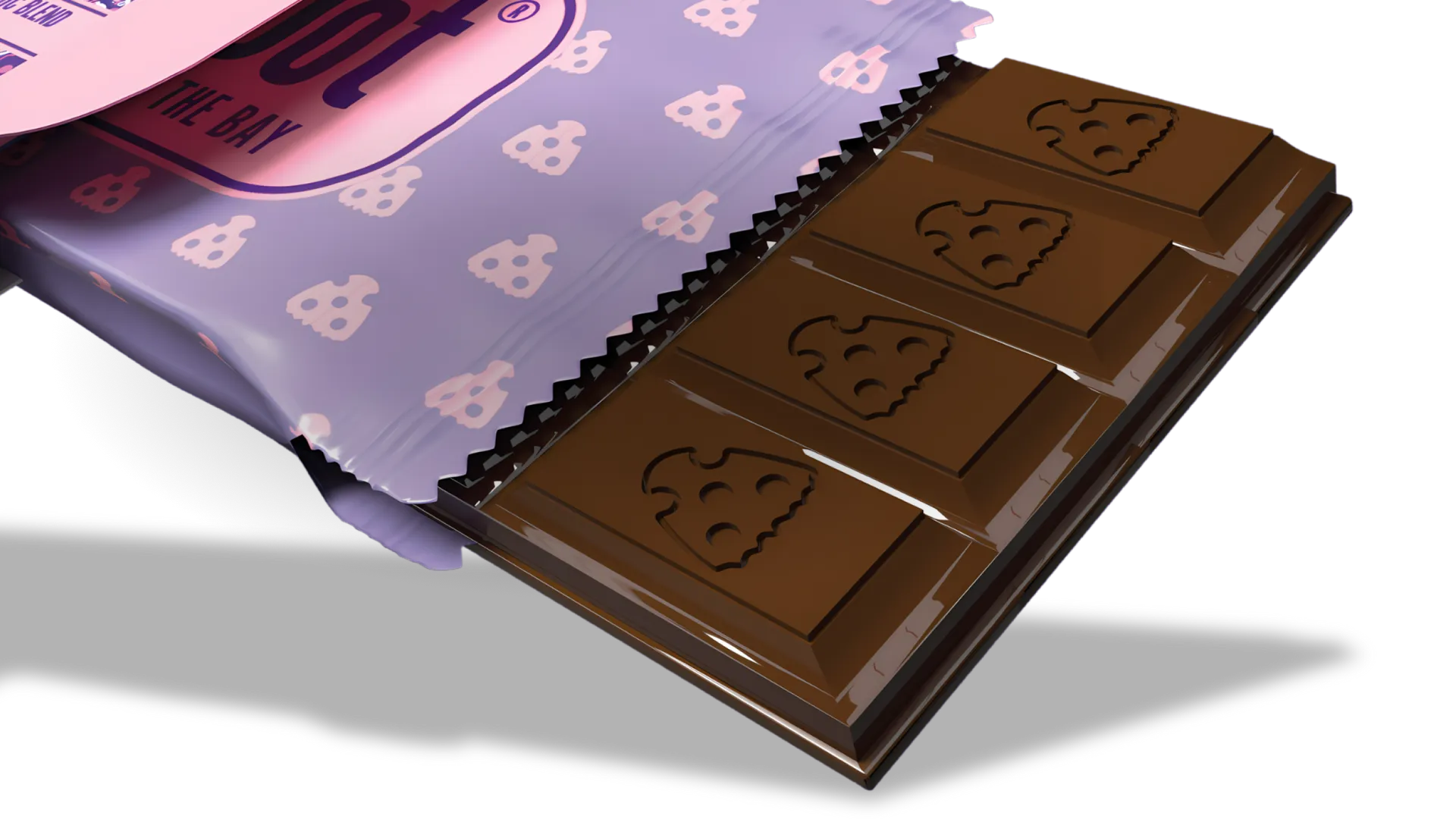
Functional mushroom chocolate suspends a dual-extracted mushroom blend in a cocoa base. Because a chocolate bar is a physically larger serving than a spoonful of instant powder, it can carry a multi-gram blend without the earthy bitterness that limits how much extract a coffee blend can hold before it tastes like soil.
Cocoa is not a neutral carrier either. It contributes flavanols, theobromine, and magnesium of its own. A 2020 randomised, double-blind study published in Scientific Reports (Gratton et al.) found that healthy adults given cocoa flavanols showed faster, larger brain-oxygenation responses and performed better on cognitive tests — but only when the task was genuinely demanding. The delivery vehicle contributes to the outcome rather than just hiding the taste.
Head-to-Head Comparison
| Factor | Mushroom Coffee | Mushroom Chocolate |
|---|---|---|
| Typical mushroom dose | Low to moderate; often undisclosed per species | Moderate to high; disclosed blend weight |
| Caffeine | Yes — 50–100 mg typical | None beyond trace cocoa theobromine |
| Fat-soluble absorption | Poor without added fat | Strong — cocoa butter matrix |
| Portability | Needs hot water | Eat anywhere, no prep |
| Taste compliance | Earthy notes are common | High — tastes like dessert |
| Dose control | Per-scoop variance | Precise per square |
| Best for | Existing coffee drinkers | Caffeine-sensitive, evening, or all-day use |
Absorption: Why the Fat Matrix Matters
Functional mushrooms contain two classes of active compounds with opposite solubility. Beta-glucans and polysaccharides are water-soluble and extract well in a hot drink. Triterpenes — including the ganoderic acids that drive most of Reishi's calming and adaptogenic effects — are not. They are alcohol- and fat-soluble.
Drop a triterpene-rich extract into black coffee and a meaningful fraction of it passes through with limited uptake. Suspend the same extract in cocoa butter and it arrives pre-dissolved in the lipid phase your gut is already built to absorb. This is why the mushroom powder in your coffee performs better with cream than without — and why a chocolate base has the advantage built in.
Dose Accuracy: The Biggest Real Difference
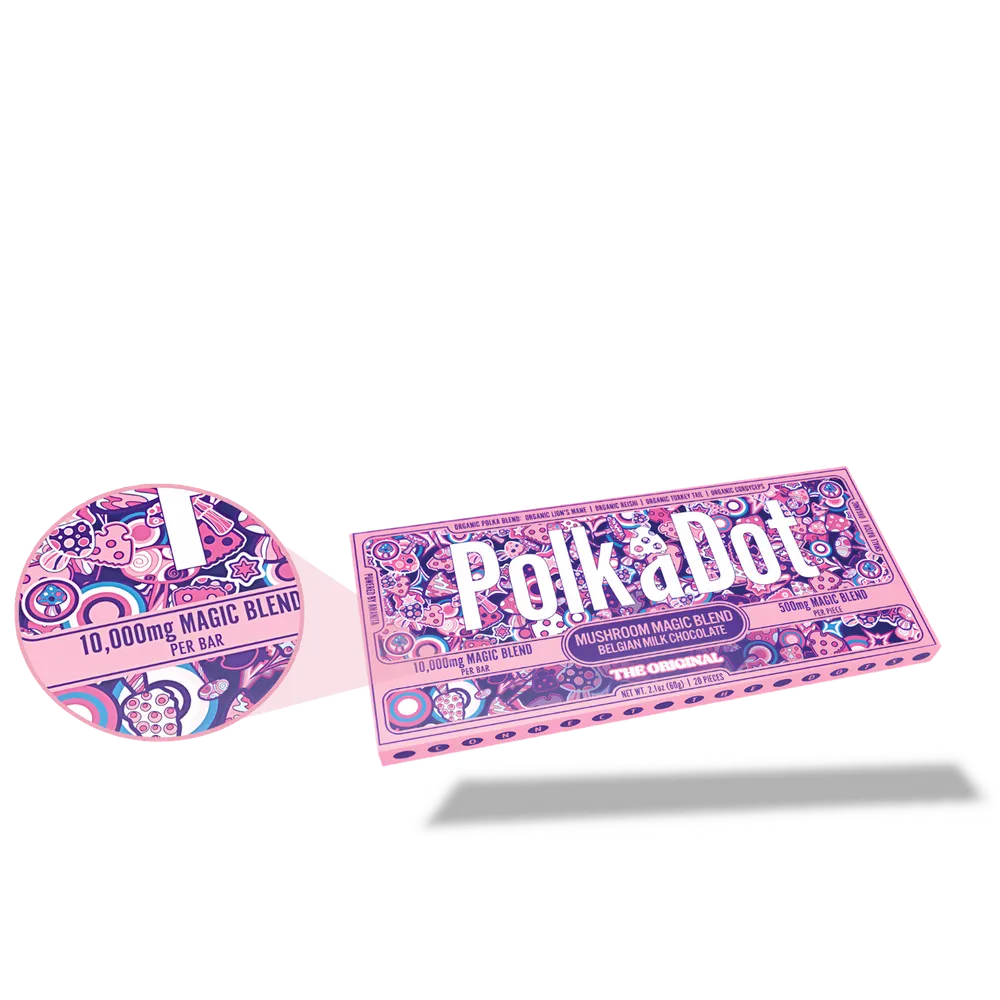
This is where the two formats genuinely diverge. A chocolate bar is manufactured as a fixed unit — the blend is metered into a mold, and every square carries a known share. A scoop of instant powder depends on how you packed it, how the blend settled in shipping, and how honestly the label reports per-species amounts.
Watch for the same red flags in both categories:
- Proprietary blends with no per-species breakdown — A "10-mushroom blend, 500 mg" tells you nothing. Split ten ways, that's 50 mg each: below any studied threshold.
- Mycelium on grain — Grown on rice or oats and sold whole, so a large share of the labeled weight is starch, not mushroom. Look for fruiting body on the label.
- No third-party COA — Without a certificate of analysis you have no verification of potency, heavy metals, or contaminants. Ours are published; see our certificate of authenticity.
- Single extraction — Water-only extraction misses triterpenes. Dual extraction (hot water plus alcohol) captures both compound classes.
To judge any product in either category, compare its disclosed per-species amount against the ranges the research actually uses:
| Species | Studied daily range | Primary use | Time to noticeable effect |
|---|---|---|---|
| Lion's Mane | 500–3,000 mg | Focus, memory, NGF support | 4–8 weeks |
| Reishi | 1,000–3,000 mg | Stress response, sleep quality | 1–3 weeks |
| Cordyceps | 1,000–3,000 mg | Energy, ATP, aerobic capacity | 1–4 weeks |
| Turkey Tail | 1,000–3,000 mg | Immune modulation | 4–8 weeks |
A blend delivering 250–500 mg of all four combined is not comparable to any row in that table. That is the single most useful number to hunt for on a label — and the number the weakest products in both categories decline to publish.
Caffeine: The Variable Nobody Prices In
Caffeine's mean half-life is about five hours, with a documented range of 1.5 to 9.5 hours depending on smoking status, pregnancy, oral contraceptive use, and body weight (NIH StatPearls). That means an afternoon cup is still working on you at bedtime — and it is why "I don't feel it anymore" is a poor guide to whether it is affecting your sleep.
The FDA cites 400 mg per day as an amount not generally associated with negative effects in healthy adults — about two to three 12 oz cups of coffee. But the binding constraint isn't the daily ceiling. It's the timing.
That creates a hard cap on mushroom coffee. You cannot take a second or third serving in the afternoon to reach a clinically meaningful daily mushroom dose without also pushing caffeine into your evening. Chocolate has no such ceiling — and where caffeine is concerned, it starts from zero:
You can take chocolate at 9 a.m. and again at 4 p.m., or in the evening alongside Reishi's sleep-supporting triterpenes, and reach your target dose without touching your sleep architecture. That flexibility is the practical reason a chocolate or gummy format can hit clinical dose ranges that a once-daily coffee cannot.
If sustained energy is your actual goal, Cordyceps works on ATP production rather than adenosine blockade — no crash, no tolerance escalation.
Taste, Compliance, and the Format You'll Actually Keep
Functional mushrooms are a compounding habit, not a stimulant. Benefits build over weeks of daily use, which makes adherence the single strongest predictor of results. The best-dosed product on the market delivers nothing if it sits in a cupboard.
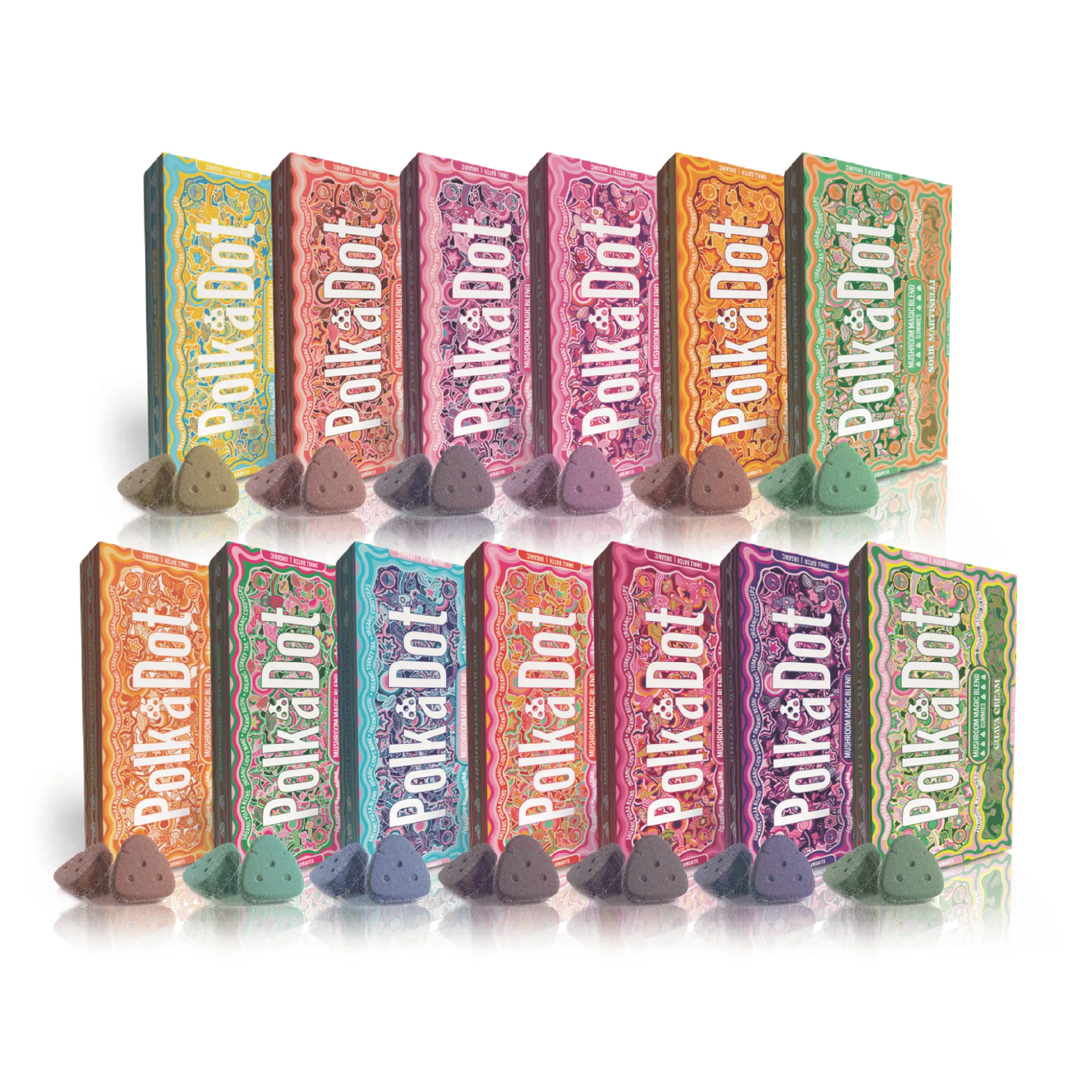
This is where chocolate's advantage is behavioral rather than biochemical. Nobody has to be talked into eating chocolate. Mushroom coffee, by contrast, asks you to accept an earthy note in a beverage you already have strong opinions about — and the drop-off rate reflects that. If you want a middle ground, functional mushroom gummies deliver similar convenience in a smaller, portion-controlled format.
Cost Per Effective Dose
Compare cost per milligram of actual mushroom extract, not cost per serving. A $1.20 cup of mushroom coffee delivering 250 mg of undisclosed blend is more expensive per effective milligram than a chocolate bar with several grams of dual-extracted, fruiting-body blend across its servings.
Run the arithmetic before you buy: divide the price per serving by the disclosed extract weight in that serving. If a brand won't publish the weight, you can't do the math — and that opacity is itself the answer.
Which Format Should You Choose?
- Choose mushroom coffee if you drink coffee daily, want mushrooms with zero added steps, and treat the mushroom content as a bonus rather than the point.
- Choose mushroom chocolate if you want a verifiable dose, are caffeine-sensitive, need afternoon or evening servings, or want the fat-matrix absorption advantage.
- Choose gummies if portability and portion control matter more than absorption efficiency.
- Run both if you want mushrooms in your morning coffee and a second dose later in the day — there are no interactions, just watch total caffeine.
Not sure which mushrooms you need in the first place? Our product quiz matches you to a format and blend in about a minute, and the dosing guide covers how much of each species to aim for.
Frequently Asked Questions
Is mushroom chocolate better than mushroom coffee?
For most people, yes — mushroom chocolate delivers a more accurate, verifiable dose with no caffeine and better fat-soluble absorption. Mushroom coffee is the better choice only if you specifically want caffeine alongside your mushrooms and prefer a hot drink ritual.
Can I take mushroom coffee and mushroom chocolate together?
Yes. There are no known interactions between functional mushrooms and caffeine, and the two formats stack safely. Just track your total caffeine intake — the FDA considers up to 400 mg per day safe for most healthy adults.
Does heat from brewing destroy the mushroom compounds?
No. Beta-glucans and most polysaccharides are extracted using hot water and are heat-stable. Brewing does not meaningfully degrade them. The real issue with mushroom coffee is dose size, not heat.
How long does each format take to work?
Both work on the same biological timeline because the mushrooms are identical. Expect energy and stress-response shifts in 1 to 2 weeks and cognitive benefits from Lion’s Mane at 4 to 8 weeks of consistent daily use. Format affects convenience and absorption, not the underlying timeline.
Which format is cheaper per effective dose?
Compare cost per milligram of actual mushroom extract, not cost per serving. A cheap mushroom coffee at 250 mg per cup can cost more per effective dose than a chocolate bar with a fully disclosed multi-gram blend.
References
- Mori K, Inatomi S, Ouchi K, Azumi Y, Tuchida T. Improving effects of the mushroom Yamabushitake (Hericium erinaceus) on mild cognitive impairment: a double-blind placebo-controlled clinical trial. Phytotherapy Research. 2009;23(3):367–372.
- Gratton G, Weaver SR, Burley CV, et al. Dietary flavanols improve cerebral cortical oxygenation and cognition in healthy adults. Scientific Reports. 2020;10:19409.
- Evans J, Richards JR, Battisti AS. Caffeine. StatPearls, NIH National Library of Medicine.
- U.S. Food & Drug Administration. Spilling the Beans: How Much Caffeine is Too Much?
- National Institutes of Health, Office of Dietary Supplements. Dietary Supplement Fact Sheets.

Shop PolkaDot™ Functional Chocolate
Four dual-extracted mushrooms in a cocoa butter base — a fully disclosed dose you'll actually look forward to taking every day.